What Are NMFS Restrictions?
Stay Updated on ESA Restrictions
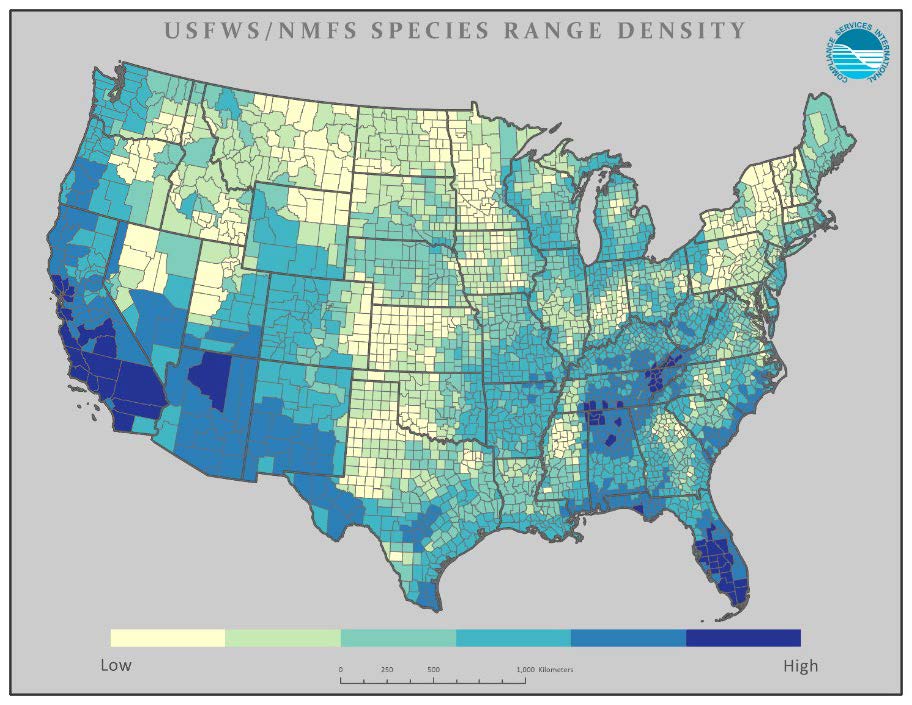
When it comes to pesticide regulation for endangered species, you’ll often hear about restrictions coming from the consult with two major federal bodies: the National Marine Fisheries Service (NMFS) and the U.S. Fish & Wildlife Service (USFWS).
If you’re managing compliance, it’s worth understanding what NMFS restrictions are, why they matter, and how they differ from other EPA mitigation language.
Why NMFS is Involved in Pesticide Regulation
NMFS (National Marines Fisheries Service), also known as the National Oceanic and Atmospheric Administration (NOAA) Fisheries, administers ESA protections for marine and anadromous fish, estuarine species, and aquatic systems. The EPA must consult NMFS (and USFWS) - "the Services" - when a pesticide may affect a listed species or its critical habitat.
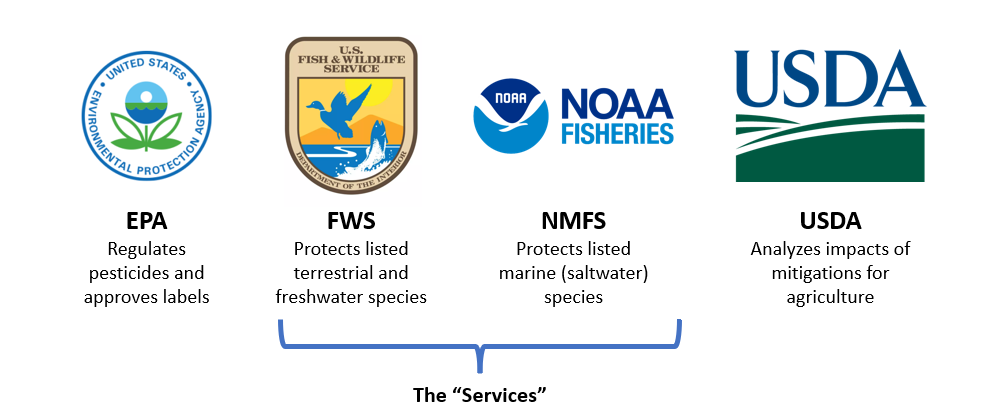
Here's how the process works:
- When the EPA evaluates a pesticide registration (or registration review), it assesses whether the use may affect ESA-listed species or critical habitat.
- If the EPA determines there may be effects, it must formally consult with the Services under ESA Section 7.
- The outcome is often a Biological Opinion (BiOp) or “conference opinion,” which includes mandatory reasonable and prudent measures, and may require mitigation to avoid jeopardizing the species or modifying its habitat.
- Based on that BiOp, the EPA then incorporates protections into labels, bulletins, and PULAs. For example, the EPA recently announced multiple actions to protect endangered species from the insecticide Carbaryl under NMFS consultation.
NMFS vs. EPA Point Systems: A Critical Distinction
Important: NMFS restrictions use different point systems and mitigation options than EPA's standard mitigation framework. This distinction is crucial for compliance.
When a NMFS bulletin requires mitigation points, you cannot use the mitigation options from the EPA Mitigation Menu. Instead, you must:
- Use the point system outlined in the specific bulletin
- Select mitigation options only from the table or link provided within that bulletin
- Follow the bulletin's exact requirements for calculating required points and selecting qualifying practices
Each NMFS bulletin includes a link to the specific mitigation options allowed for that product and geographic area. These NMFS-specific mitigation tables are tailored to the aquatic species and habitats protected under that particular Biological Opinion.
Why this matters: Using EPA Mitigation Menu options when a NMFS bulletin specifies its own mitigation system would be non-compliant. Always verify which system applies — EPA or NMFS — and use the corresponding mitigation framework.
Pro Tip: The Acre Blitz API manages this for you — automatically identifying whether NMFS or EPA mitigation systems apply and ensuring you use the correct point system and mitigation options for each bulletin.
Key Features of NMFS-Driven Restrictions
When NMFS is involved, the resulting restrictions tend to include these characteristics:
- Aquatic habitat focus – Restrictions often revolve around surface waters, estuaries, tributaries, floodplains, and wetlands that support listed fish or aquatic invertebrates.
- Buffer distances – Labels will specify buffer zones from “ESA-listed species habitat” when spray or runoff might reach that habitat.
- Runoff/Drift mitigation – Because runoff from treated fields can carry active ingredients into aquatic systems, mitigation measures (point systems, vegetative buffers, water retention, etc.) are frequently required.
- Geographically defined PULAs + Bulletins – The restrictions may apply only in certain counties or specific PULAs (Pesticide Use Limitation Areas) where listed species habitat is present.
- Field/Application parameter exemptions – Some labels will allow exemptions if certain infrastructure or management practices exist (e.g., tailwater retention systems, berms, tile drains).
- Cumulative risk and rate-based requirements – Restrictions may depend on application rate, depth of soil incorporation, proximity to habitat, and application method.
Real Label Limitation Language – Three Examples
Here are three real examples of bulletin language that demonstrate how NMFS restrictions appear in practice.
Example 1 — Drexel Carbaryl 4L (EPA # 19713-49)
“For this Bulletin, ESA‐listed species habitat is defined as surface waters within the PULA that are accessible to ESA‐listed species, including but not limited to lakes, ponds, reservoirs, rivers, streams, inundated floodplains, wetlands, estuaries, and marine near-shore areas. When determining buffer distances, measure from the ordinary high-water mark. For flooded habitats (inundated floodplains, e.g., Yolo Bypass), measure from the edge of the inundated area.
When applying carbaryl by airblast at rates ≥1 lb carbaryl/A, do not apply within 55 ft of ESA‐listed species habitat … when wind is blowing toward the ESA‐listed species habitat or when wind is blowing ≤ 2 mph. Alternatively, maintain a functional riparian system > 10 m wide alongside any fish habitat adjacent to treatment area.
Implement at least one runoff reduction measure. … choose at least one runoff reduction measure from the table.”
Example 2 — Vulcan (EPA # 66222-233)
“For this mitigation measure, salmonid, sturgeon, and eulachon habitat (referred to below as “fish habitat”) is defined as surface waters accessible to salmon, sturgeon, and eulachon, including but not limited to lakes, reservoirs, rivers, streams, inundated floodplains, wetlands or natural ponds, estuaries, and marine near-shore areas. … How to determine the required mitigation points for your application: Step 1. Determine the number of runoff mitigation points needed … Step 2. … choose mitigation options from the table that provide an equal or greater value of points for runoff.”
Example 3 — PicadoR (EPA # 93930-58)
“When applying metolachlor products within 50 meters (164 feet) of salmonid habitat … Do not apply this product when soil is saturated, or when a storm event likely to produce runoff … is forecasted (by NOAA/National Weather Service …) within 48 hours following application.”
These examples highlight how NMFS restrictions are incorporated into bulletins via buffer zones, habitat definitions, runoff/erosion mitigation, and conditional timing restrictions.
How to Navigate NMFS Restrictions in Your Workflow
Here’s an order of operations you can follow to ensure you comply with NMFS-driven restrictions:
- Identify if the product is one with NMFS restrictions
Check the label for references to check the "Bulletins" or "Bulletins Live! Two" - Check for active PULAs or Bulletins
If inside a PULA defined for that product and date, you must follow the Bulletin instructions (sometimes stricter than the label). - Review buffer zones and habitat definitions
Determine how far your application area is from the defined “fish habitat” or “ESA-listed species habitat”. - Check application method, rate, and timing conditions
See whether your use exceeds a rate threshold, or whether timing (e.g., heavy rain forecast) triggers restrictions. - Determine mitigation obligations
If the bulletin sets a point-system for runoff or drift mitigation (as in the Vulcan example) you must select and document mitigation practices that meet or exceed the required point total. - Document compliance
Maintain records of the bulletins checked, buffer distances measured, runoff/drift mitigation measures in place, and the date/method of application. - Update your compliance process
Because NMFS-based label language and Bulletins are actively evolving, incorporate quarterly or yearly review of products and labels in your compliance program.
Why NMFS Restrictions are Increasing in Importance
- NMFS consultations (especially with aquatic species) often result in nationwide label amendments and geographically specific bulletins. For example, EPA’s recent action on carbaryl under NMFS consultation issued new label amendments and bulletins.
- Many agricultural uses potentially drain into rivers, wetlands, or estuaries. That means “non-coastal” fields can still trigger NMFS restrictions if runoff ends up in fish habitat.
- There are currently more products with "NMFS" limitations, than with EPA limitations, and often compliance means leaving a buffer from the habitat or in some cases a prohibition on the use of the pesticide in an area.
Summary
NMFS restrictions represent the deeper layer of ESA compliance for pesticide use — especially when aquatic species, fish habitat, or marine/estuarine ecosystems are involved. For many products, the label + any associated bulletins drive buffer zones, mitigation obligations, application restrictions, and timing controls.
Understanding NMFS involvement helps you anticipate when a product will require more than just “check a map” — it may require runoff mitigation, buffer calculations, habitat delineation, and documented recordkeeping.
Stay proactive: ensure your compliance checklist includes NMFS-specific triggers, review label language for aquatic habitat references, and update your internal workflows as these restrictions continue to evolve.